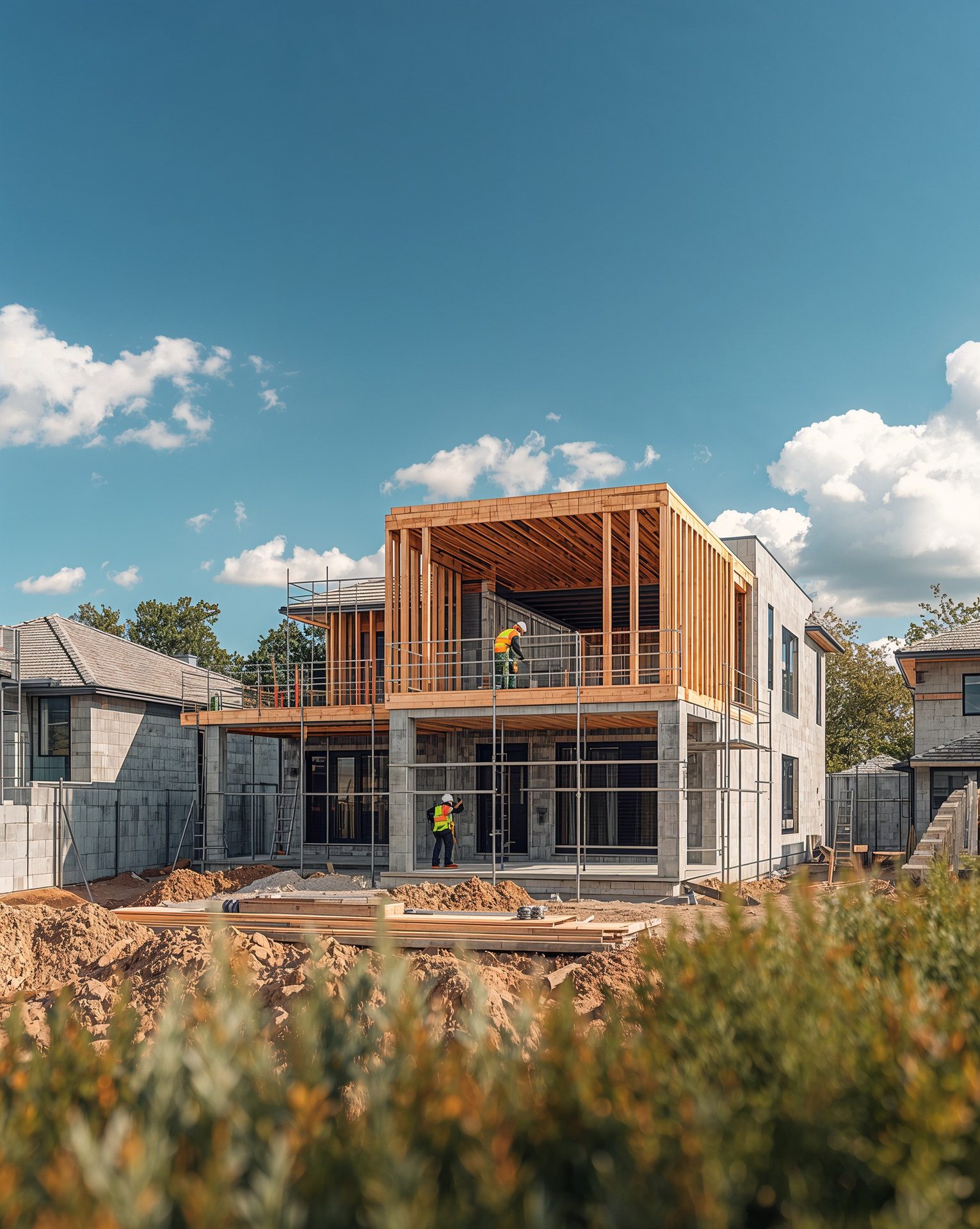
Mold, Moisture & Waterproofing: What Floridians Must Know

Mold is Florida's quietest and most expensive home problem. It does not announce itself like a hurricane; it grows silently behind baseboards, above shower ceilings, and inside wall cavities wherever moisture lingers — and by the time it is visible, remediation, not cleaning, is the conversation. The good news: mold is not mysterious. It follows moisture with complete predictability, which means a home built and remodeled with disciplined moisture management simply does not give it a place to start. Here is what every Florida homeowner should know.
Why Florida Homes Are Different
Mold needs moisture, warmth, and something to eat — and Florida supplies two of the three year-round. Ambient humidity sits high for most of the year, summer rains test every exterior joint, and paper-faced drywall is a buffet. The margin for error here is smaller than anywhere else in the country: a flashing detail that survives a decade in Arizona fails in two summers in Broward County. That is why mold prevention in Florida is really three disciplines practiced together — keeping bulk water out, controlling indoor humidity, and building wet areas so they can get wet.
Keep Bulk Water Out: The Building Envelope
Most serious mold cases trace back to a leak, not humidity. The critical paths:
- Roof and flashing. Valleys, penetrations, and wall-to-roof intersections are where roofs actually leak. Older Florida homes deserve inspection long before stains appear on a ceiling.
- Windows and doors. Correct pan flashing and sealing at every opening — especially newly installed impact windows — is non-negotiable; a beautiful window installed without proper waterproofing is a slow leak with a warranty.
- Stucco and exterior cracks. Hairline stucco cracks wick wind-driven rain into block and frame walls; sealing and repainting with quality elastomeric systems is maintenance, not cosmetics.
- Plumbing leaks. Slab leaks and failing supply lines wet homes from the inside. Aging galvanized or polybutylene pipe should be replaced before it fails — ideally during a remodel when walls are open — and smart leak detection with automatic shutoff protects the house when nobody is home.
Control Humidity: The Invisible Half of the Battle
A house can grow mold without a single leak if indoor humidity stays high enough long enough. Keeping the indoor air in the healthy range comes down to the HVAC system:
- Right-sized, variable-speed air conditioning. Oversized units cool fast and shut off before dehumidifying; long, low runtimes wring moisture from the air.
- Sealed ductwork. Leaky return ducts pull humid attic air into the system and the house.
- Exhaust to the outside. Bathroom and laundry fans must vent through the roof or wall — venting into the attic relocates the problem to the worst possible place.
- Seasonal-home strategy. Homes closed up for the summer need humidity management — a smart thermostat with humidity control or dedicated dehumidification — or the owners return to a musty, spotted interior.
Build Wet Rooms Like They Will Get Wet
Bathrooms fail behind the tile, not at it. Tile and grout are decorative shells — the actual bathroom waterproofing is the membrane behind them. In every shower we build: full waterproofing membranes across floors and walls, sloped and flood-tested pans, sealed niches and benches, and cement board rather than paper-faced drywall in wet zones. Curbless showers and wet rooms — the signatures of the modern spa bath — raise the stakes further, extending waterproofing across the whole floor. This is exactly the workmanship a homeowner cannot inspect after the fact, which makes contractor selection the real waterproofing decision; it is a core part of how we build.
After the Storm: Speed Is Everything
When water does get in — a storm, a burst line — the clock matters: drying within the first days is the difference between drying out and cutting out. Move fast, dry aggressively, open wet wall bases rather than hoping, and document everything for insurance. A standby generator that keeps AC running after a hurricane is, among other things, a mold-prevention device.
Remodeling as the Reset Button
A major renovation is the one chance to correct decades of accumulated moisture sins at once — replace suspect plumbing, fix flashing, seal ducts, rebuild bathrooms with real membranes, and bring ventilation to code. Ask any contractor you interview how they handle waterproofing and humidity, and expect specific answers; our FAQ covers what that looks like inside a real project.
Work With Xpert Construction Group
Xpert Construction Group builds Florida homes and remodels engineered for this climate — licensed and insured, CRC 1335930, with waterproofing and moisture control treated as structural priorities, not afterthoughts. Contact us for a free consultation.
Plan Your Project With Florida's Luxury Construction Experts
Licensed & insured (CRC 1335930), 25+ years of experience, design-build delivery. Get straight answers and a clear plan.
Schedule a Free Consultation