Inspections During Construction: What Gets Checked and When
Once a permit is issued, your project enters a rhythm that governs the entire construction schedule: build, inspect, pass, proceed. Inspections are the checkpoints where your building department verifies that the work matches the approved plans and the Florida Building Code. Understanding the sequence helps you read your project's real progress — and explains why a well-run job never "just keeps building" past a required hold point.
Why the Inspection Sequence Exists
Each inspection happens at the last moment the work is still visible. Once concrete is poured, you can't see the reinforcing steel; once drywall hangs, you can't see the wiring. Florida law prohibits covering work that requires inspection until it's approved — and a contractor who drywalls over unapproved framing will be ordered to open it back up. The sequence below is typical for a South Florida custom home or major addition; remodels use the same logic with fewer steps.
The Major Inspection Milestones
- Site and foundation — setbacks verified, soil compaction documented, footing excavations, reinforcing steel size and placement checked before any concrete pour. In flood zones, slab elevation is confirmed against the approved plans, often with a surveyor's form.
- Slab / stem wall — plumbing rough-in under the slab is inspected and pressure-tested before the pour, along with termite treatment documentation (a Florida essential).
- Tie beam and structural concrete — in South Florida's concrete-block construction, inspectors check cell reinforcement, tie beams, and embedded straps that form the hurricane load path.
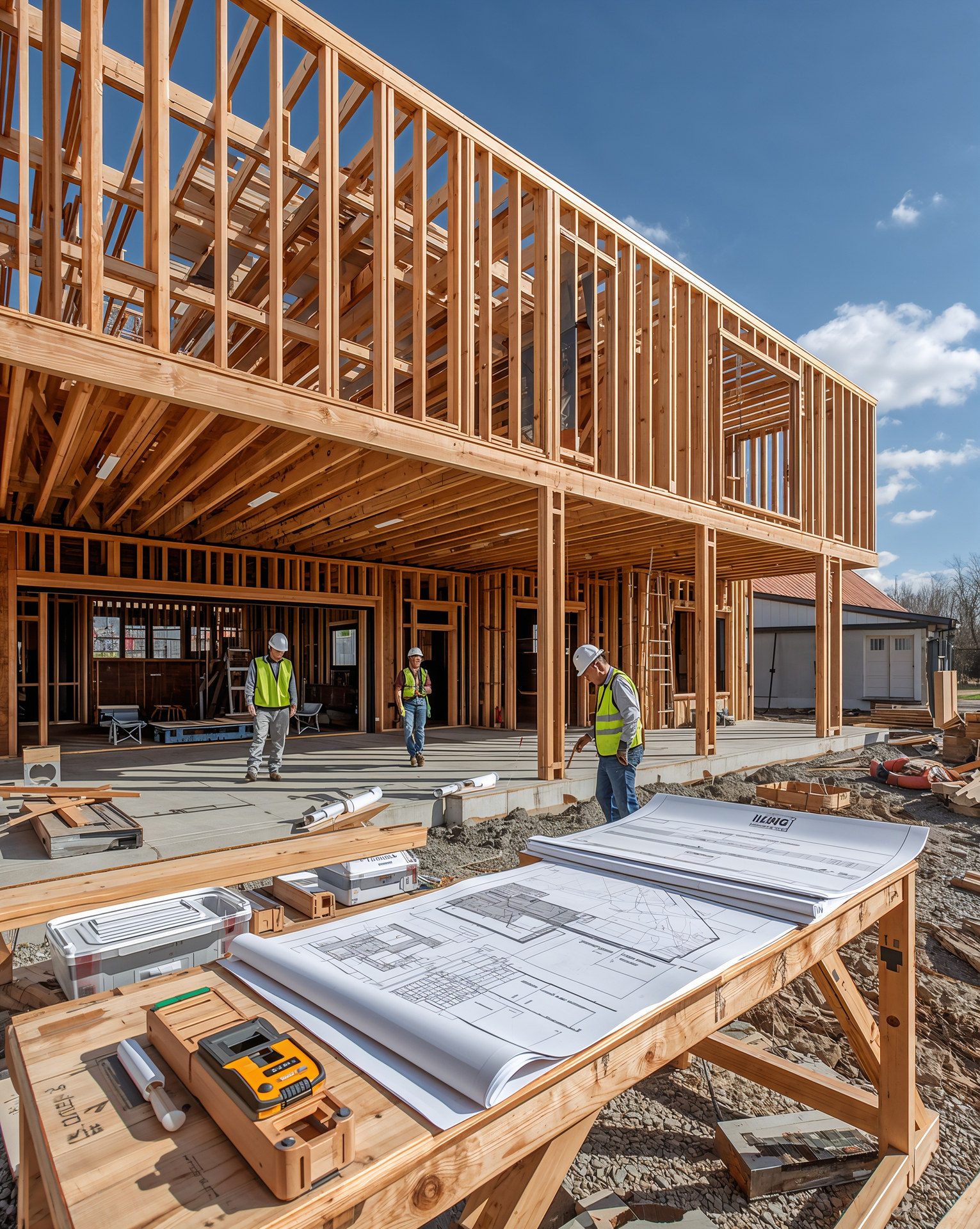
- Framing / sheathing — roof trusses and their engineered layout, hurricane connectors, roof sheathing nailing patterns, and window and door bucks. In the HVHZ, expect close attention to fastener spacing and product labeling.
- Rough-in inspections — electrical, plumbing, and mechanical systems inspected inside open walls and ceilings: wire sizing and box fill, drain slope and venting, duct routing and sealing.
- Insulation — R-values and installation quality checked before drywall, tied to the energy code compliance forms.
- Roofing in-progress and final — deck attachment, underlayment or secondary water barrier, and finished roofing per the product approval.
- Final inspections — every trade gets a final; the building final confirms life-safety items like smoke and carbon monoxide detectors, GFCI protection, egress, handrails, and that the house matches the permitted drawings.
Windows and doors, water heaters, pools, and other components carry their own inspection points along the way.
What Inspectors Are Really Looking For
Inspectors aren't grading craftsmanship or finishes — they're verifying code compliance and plan conformity. The most common reasons residential inspections fail are mundane: missing paperwork on site, work not ready when the inspector arrives, unapproved plan deviations, missing hurricane straps or incorrect fastener schedules, and unsealed penetrations in fire-rated or energy-related assemblies. None of these are exotic; all of them are preventable with preparation.
How a Good Contractor Keeps Inspections Passing
The quiet skill in general contracting is sequencing: scheduling trades so each stage is genuinely complete before the inspection is called, walking the job with a checklist beforehand, and keeping the approved plans, permit card, and engineering letters on site. A failed inspection costs days; a pattern of failed inspections costs weeks and tells you something about the builder. Our project managers pre-inspect every milestone before the building department arrives — it's part of the quality control process described on our why choose us page, and one reason our projects close out cleanly.
What Homeowners Should Do During Inspections
Mostly: nothing, and that's the point of hiring professionals. But you should expect transparency —
- Ask for the permit number and learn to check inspection results on the jurisdiction's online portal
- Expect your contractor to tell you when key inspections are scheduled and share results
- Never allow anyone to cover work that hasn't passed inspection
- At the end, confirm the final inspection passed and the permit is closed — an expired permit with no final becomes your problem at resale
Inspections on Remodels
Interior projects follow the same pattern in miniature. A kitchen remodel that moves plumbing and adds circuits will see rough plumbing, rough electrical, and finals; a whole-home renovation layers in framing and insulation inspections wherever walls open. The cadence is faster, but skipping steps carries exactly the same consequences.
Work With Xpert Construction Group
Xpert Construction Group is a Florida licensed and insured general contractor — CRC 1335930 — with 25+ years of combined experience managing inspections across South Florida jurisdictions. We schedule, pre-check, and document every milestone so your project keeps moving. Contact us for a free consultation.
Plan Your Project With Florida's Luxury Construction Experts
Licensed & insured (CRC 1335930), 25+ years of experience, design-build delivery. Get straight answers and a clear plan.
Schedule a Free Consultation